
Bhavna reflects on the death of her sister and the rituals that brought meaning

When my sister died in 2024, it was a devastating and shocking experience. She was found unconscious and unresponsive in her home. Although we thought there may be a chance of survival, after several tests, she was officially declared dead… something which is still hard for me to say. Although her death is still quite raw, I wanted to share how the rituals and cultural practices we performed helped guide me through the process.
We wanted to honour our sisters passing whilst in the hospital, so as the machines were being switched off, we performed Hindu traditions rooted in our culture. We placed Tulsi leaves into her mouth, along with water from the Ganga — the sacred river in India. A friend had collected special garlands that had adorned the gods at a temple, and we placed them around her neck. We then chanted the Mahamrityunjaya mantra, one of the most powerful mantras, while we all placed our hands on her heart. Her daughter, myself, and two of my sisters were present in the room, while my other sister and her family joined us on FaceTime from America.

As we chanted and the machines were switched off, I felt something leave my body. I saw it and felt it — a very odd experience, but one that felt deeply meaningful.
After her passing, we organised her funeral. In our culture, we cremate the dead and observe a 12 night ceremony. We placed a photograph of her adorned with a flower garland, food offerings daily and lit a diva — a lamp made with ghee and a cotton wick — keeping it burning for 12 days. That light had to stay active twenty-four hours a day. It was a deeply significant guiding light for my sister’s spirit. I remembered when our father passed and we kept the diva burning in the living room. One night, I accidentally placed a duvet down and it almost put the diva out. Everyone froze in that moment, but when the flame didn’t extinguish, we all had a laugh about it. After that, we made sure to keep my sisters diva safely away from any bedding.
During the 12 days after her death, we spent an hour every evening chanting various spiritual sanskrit chants for her spirit, joined by people from our community, her friends, and family. Those chanting sessions were the only thing that kept me together. In the midst of devastation and shock, that hour was a godsend. I could focus entirely on the chants, pouring my pain and grief into the sound, using it as a way to carry what I was going through and make sense of it all. It kept me steady, but it also felt like I was doing something meaningful for her. I will always be grateful for that ritual.
When her body was taken to the funeral home, my sisters and I went to dress her ready for the funeral. Seeing her there, her body so cold, was incredibly difficult and deeply emotional. We initially chanted to help ourselves feel grounded as I was feeling so overwhelmed with emotion. This really helped me feel settled to continue. We then talked to her as if she were still with us, and we even found moments of lightness in doing all the things she loved. She adored pink, loved make-up and bling jewellery, so we adorned her accordingly.
For the funeral, my mum had arranged for a Pundit — a Hindu spiritual priest — who provided a list of sacred items to be placed in the coffin for her cremation. These included rice balls, flour garlands, butter (had to be Anchor for some reason), coconuts (with holes so they don’t explode in the cremation), and various other offerings. During the ceremony, we adorned her coffin with all these items to send her on her way, while the Pundit chanted and guided us through each step. Everyone was then invited to place a flower into the coffin. This was deeply emotional, but also very beautiful — by the end, all you could see was her face, surrounded by a river of flowers.
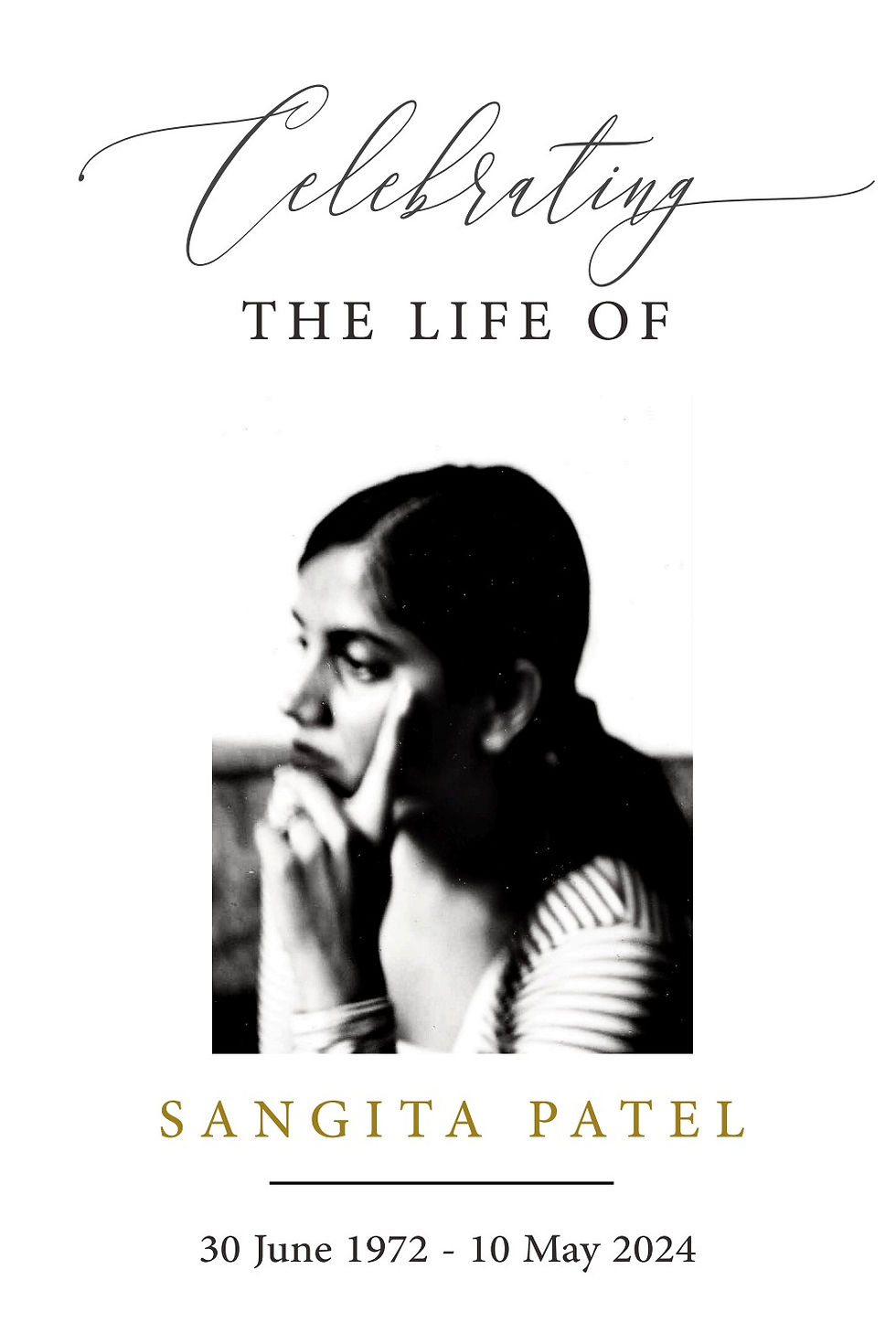
The Pundit spoke about our culture’s belief in reincarnation, and we shared a few words as a family. Then my sister’s body was cremated. When we eventually received her ashes, we placed them into the river along with flowers, petals, and other sacred items. In my experience, all Hindu’s place ashes into the water (ideally The Ganges) as a ritual to help the soul achieve liberation, break earthly attachments and return to nature.
After the funeral, on the 13th day I performed a ceremony for her spirit so that she may be blessed and guided by the gods & goddesses. In our culture, you’re meant to do this every year for several years, but in the west, you can complete several years worth of ceremony in a single day. The ceremony honoured several gods and goddesses adorning each statue for each year and giving them offerings of Tulsi leaves, rice, and kumkum — a red powder amongst other elements. Guided by the Pundit, I placed offerings of rice and ghee into the sacred fire (Havan) whilst chanting “swaha” with each offering, releasing our prayers, protection and blessings for her spirit into the flames. The entire ceremony took about seven hours. It was incredibly intense, but I felt grateful knowing I had given my sister the best send-off I could, honouring her spirit and beliefs.
Through all of these rituals, from the chanting as the machines were switched off, to the twelve-night vigil, to the funeral and 7 hour ceremony, I felt so blessed to be able to gave my sister an honoured passing filled with love and spiritual protection. And that gave me peace.

Comments